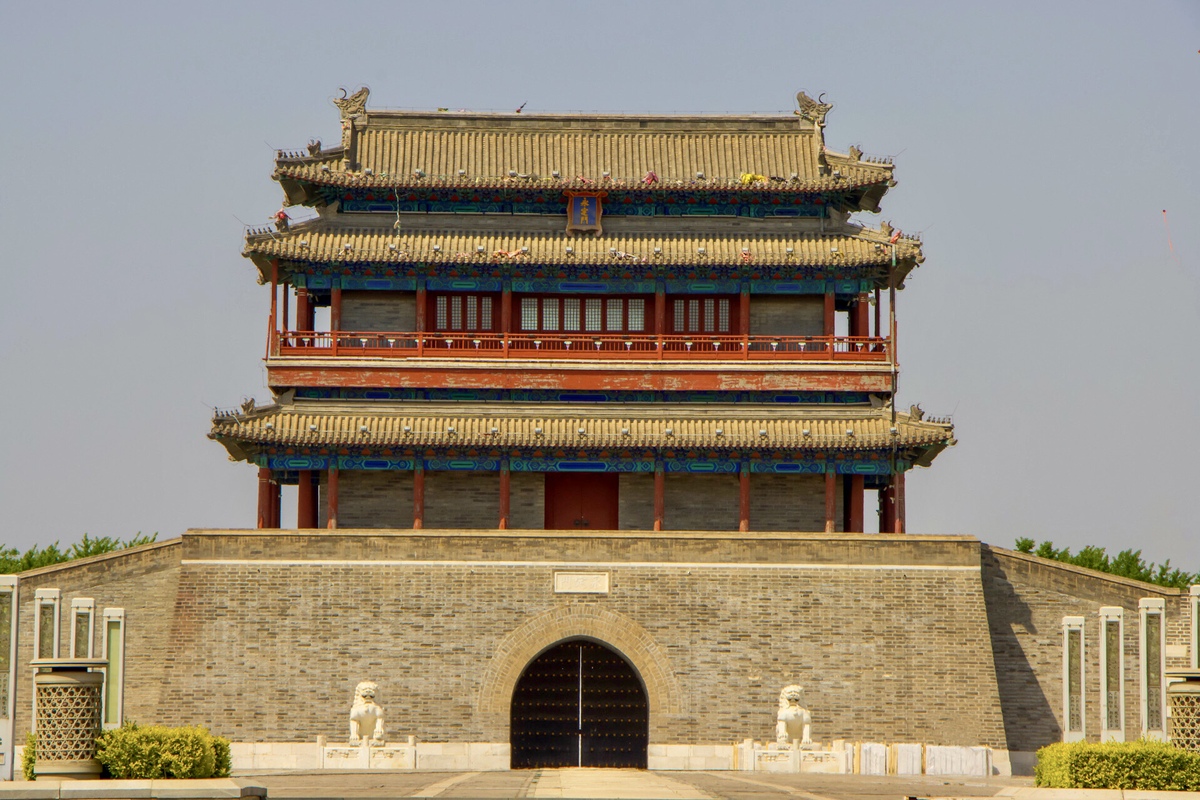
Yongdingmen Gate
Introduction
Yongdingmen Gate is a significant cultural and historical landmark located at the southern terminus of the Beijing Central Axis, a 7.8-kilometer stretch running through the heart of the old city of Beijing. This gate historically served as the southern gateway to the ancient capital, encapsulating both the architectural prowess and the rich cultural heritage of Chinese civilization. As an integral component of the Beijing Central Axis, which was inscribed on the UNESCO World Heritage List in 2024, Yongdingmen Gate stands as a testament to the enduring legacy of Chinese urban planning and imperial architecture. Its cultural and historical significance has been recognized and celebrated both nationally and internationally.
History
Origins and Construction
Yongdingmen Gate was constructed in 1553 during the Ming Dynasty as part of the outer city wall of Beijing. This gate was strategically positioned at the southern end of the Beijing Central Axis, serving a vital role in the defense and administration of the city. The gate's construction was motivated by the necessity to fortify the city against invasions and to manage the flow of goods and people into the capital. It became an essential checkpoint for those entering Beijing from the south, symbolizing both the strength and the openness of the Ming capital.
Historical Significance
Throughout its history, Yongdingmen Gate played a crucial role in the development and operation of Beijing. It was not only a military and administrative structure but also a cultural symbol of the city’s southern boundary. The gate marked the beginning of the Imperial Way, a path traditionally reserved for the emperor and other significant figures during ceremonial occasions. This axis, extending from Yongdingmen in the south to the Bell and Drum Towers in the north, reflected the symmetrical and hierarchical principles of Chinese urban planning, heavily influenced by Confucian ideals.
Destruction and Reconstruction
The original Yongdingmen Gate was dismantled in 1957 amid urban expansion and modernization efforts in Beijing. However, recognizing its historical and cultural significance, the Chinese government undertook a reconstruction project in 2004. This project aimed to restore the gate based on historical records and photographs, allowing it to regain its place as a pivotal element of the Beijing Central Axis. The reconstructed gate now serves as a cultural landmark, reflecting both the historical context of its original construction and the modern values of heritage preservation.
Architecture
Design and Structure
Yongdingmen Gate's design is a reflection of traditional Chinese architectural principles, characterized by its imposing structure and symmetrical layout. Originally, the gate featured a three-arched passageway flanked by thick, defensive walls and topped with a wooden tower. The gate's design was intended not only for defense but also for ceremonial purposes, exemplifying the grandeur of Ming architecture. The reconstructed gate maintains these architectural attributes, with meticulous attention to detail to ensure historical accuracy.
Materials Used
The original construction of Yongdingmen Gate utilized locally sourced materials, including gray bricks and timber, which were common in traditional Chinese architecture. These materials were chosen for their durability and ability to withstand the elements, critical for a defensive structure. In the reconstruction process, similar materials were used to replicate the gate's original appearance and structural integrity. The use of traditional materials and techniques in the reconstruction underscores the commitment to preserving the authenticity of this historic landmark.
Cultural Significance
Symbolism
Yongdingmen Gate is a symbol of the cultural and historical richness of Beijing. It represents the southern gateway to the ancient city and embodies the philosophical ideals of balance and symmetry central to Chinese culture. The gate, along with the entire Beijing Central Axis, is a manifestation of the Chinese worldview, which values harmony and order. This symbolism is reflected in the meticulous planning and design of the gate and its surroundings, which align with the traditional concept of "choosing the center" in urban planning.
Role in Traditional Ceremonies
Traditionally, Yongdingmen Gate was a site of significant ceremonial importance. It marked the beginning of the Imperial Way, a path reserved for the emperor during official processions. This route was used for ceremonial parades and other state functions, highlighting the gate’s importance in the cultural and political life of the city. Today, the gate continues to be a cultural landmark, attracting visitors who wish to experience the historical grandeur and ceremonial significance of Beijing's imperial past.
Yongdingmen in Modern Times
Restoration Projects
The restoration of Yongdingmen Gate in 2004 was part of a broader initiative to preserve and celebrate Beijing's historical architecture. This project was guided by historical records and aimed to restore the gate to its original grandeur. The successful reconstruction has revitalized interest in Beijing's cultural heritage, serving as a catalyst for further preservation efforts along the Beijing Central Axis. It stands as a symbol of the city's commitment to maintaining its historical identity amidst rapid urban development.
Current Status and Use
Today, Yongdingmen Gate serves as a cultural and historical monument, attracting visitors from around the world. It is a focal point for cultural activities and educational tours designed to promote understanding of Beijing's imperial history and architectural heritage. The gate and its surroundings have been integrated into the urban landscape as a public space, offering a tangible connection to the city's past while serving contemporary cultural and social functions.








